

What is the minimum quantity of beans required to use oxygen absorbers effectively?
As a supplier of oxygen absorbers for beans, I often get asked about the minimum quantity of beans needed to use our oxygen absorbers effectively. This is a crucial question, as using oxygen absorbers correctly can significantly extend the shelf - life of beans, preserving their flavor, aroma, and nutritional value.

Understanding Oxygen Absorbers
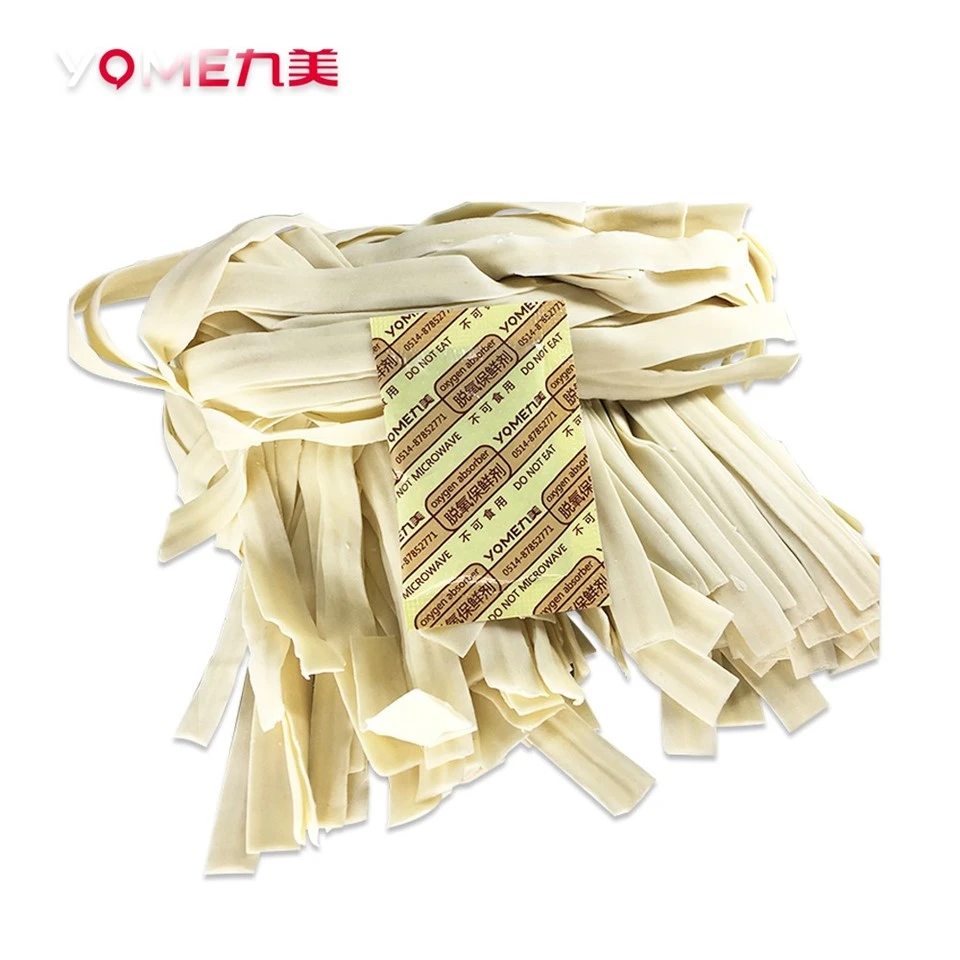
Oxygen absorbers are small packets that contain iron powder and other substances. When exposed to oxygen, a chemical reaction occurs, and the oxygen is absorbed and converted into iron oxide. This process helps to create a low - oxygen environment inside a sealed container, which is beneficial for the preservation of many food products, including beans.
There are different types of oxygen absorbers available in the market. For example, the Yome - U Universal Type is a versatile option that can be used with various types of beans. It is designed to work efficiently in different packaging sizes and conditions. Another option is the Oxygen Absorber for Coffee Beans, which is specifically formulated to meet the unique requirements of coffee beans, such as maintaining their freshness and preventing oxidation. And of course, our Food Safe Oxygen Absorbers ensure that the beans remain safe for consumption while being stored.
Factors Affecting the Minimum Quantity of Beans
The minimum quantity of beans required to use oxygen absorbers effectively depends on several factors:
1. Size of the Oxygen Absorber
Oxygen absorbers come in different sizes, typically measured by the amount of oxygen they can absorb. For example, a small 50cc oxygen absorber can absorb 50 cubic centimeters of oxygen. Larger absorbers, such as 300cc or 500cc, can absorb more oxygen. The size of the absorber you choose should be based on the volume of the container and the amount of oxygen present in it. If you are using a small 50cc oxygen absorber, you may only need a relatively small quantity of beans, perhaps around 100 - 200 grams, in a small, air - tight container. On the other hand, if you are using a 500cc oxygen absorber, you will need a larger quantity of beans, maybe 1 - 2 kilograms, to make the most of its oxygen - absorbing capacity.
2. Type of Beans
Different types of beans have different oxygen requirements. For instance, coffee beans are more sensitive to oxygen compared to some other types of beans. Coffee beans contain volatile compounds that can be easily oxidized, leading to a loss of flavor and aroma. As a result, when using oxygen absorbers with coffee beans, you may need to ensure a proper ratio of beans to oxygen absorber to maintain their quality. In general, for coffee beans, a higher density of beans in the container is recommended. A good starting point could be around 500 grams of coffee beans per 100cc oxygen absorber.
Other types of beans, such as kidney beans or chickpeas, are less sensitive to oxygen but still benefit from oxygen absorbers. For these beans, you can use a slightly lower ratio. Maybe 1 - 1.5 kilograms of these beans per 100cc oxygen absorber would be sufficient.
3. Packaging Material
The type of packaging material also plays a role. If you are using a high - barrier packaging material, such as a foil - lined bag, it will prevent oxygen from entering the container from the outside. This means that you can use a smaller quantity of beans with an oxygen absorber because there is less oxygen to begin with. In contrast, if you are using a less - effective packaging material, like a regular plastic bag, more oxygen may seep in over time. In this case, you may need to use a larger quantity of beans to create a more oxygen - rich environment for the absorber to work on and also to compensate for the potential oxygen ingress.
Calculating the Minimum Quantity
To calculate the minimum quantity of beans required, you first need to determine the volume of the container. Measure the length, width, and height of the container (in centimeters) and multiply these values to get the volume in cubic centimeters (cc).
Next, consider the size of the oxygen absorber you plan to use. For example, if you have a 200cc oxygen absorber and you are storing coffee beans, and you know that for coffee beans, a ratio of 5 grams of beans per cc of absorber capacity is a good rule of thumb. Then the minimum quantity of coffee beans you would need is 200cc * 5 grams/cc = 1000 grams or 1 kilogram.
If you are storing other types of beans, say kidney beans, and you use a ratio of 10 grams of beans per cc of absorber capacity, for the same 200cc oxygen absorber, you would need 200cc * 10 grams/cc = 2000 grams or 2 kilograms.
Importance of Using the Right Quantity
Using the correct minimum quantity of beans with oxygen absorbers is essential. If you use too few beans, the oxygen absorber may quickly absorb all the available oxygen and then become saturated. Once saturated, it will no longer be effective in preventing oxidation. Additionally, if there is too much empty space in the container, more oxygen can enter over time, reducing the overall effectiveness of the oxygen absorber.
On the other hand, if you use too many beans, the oxygen absorber may not be able to absorb all the oxygen present in the container, especially if the absorber is too small. This can lead to incomplete oxygen removal and still result in oxidation of the beans.
Real - World Examples
Let's take a look at some real - world examples. Suppose you have a small, air - tight glass jar with a volume of 500cc. You decide to use a 100cc oxygen absorber. If you are storing coffee beans, using the ratio of 5 grams of beans per cc of absorber capacity, you would need 100cc * 5 grams/cc = 500 grams of coffee beans. You would place the beans in the jar, add the oxygen absorber, and then seal the jar tightly.
If you are using the same 500cc jar and a 100cc oxygen absorber to store kidney beans, with a ratio of 10 grams of beans per cc of absorber capacity, you would need 100cc * 10 grams/cc = 1000 grams or 1 kilogram of kidney beans.
Conclusion and Call to Action
In conclusion, the minimum quantity of beans required to use oxygen absorbers effectively varies depending on the size of the oxygen absorber, the type of beans, and the packaging material. By understanding these factors and calculating the appropriate quantity, you can ensure that your beans are stored in the best possible conditions, maintaining their quality for a longer period.
If you are interested in purchasing our high - quality oxygen absorbers for your bean storage needs, we would be more than happy to assist you. Whether you are a small - scale home user or a large - scale food distributor, we have the right oxygen absorbers for you. Contact us to discuss your specific requirements and start preserving the freshness of your beans today.
References
- "Food Packaging: Principles and Practice" by Yam, K. L., & Lee, S. Y.
- "Oxygen Absorbers in Food Packaging" - Journal of Food Science and Technology
- Manufacturer's guidelines for oxygen absorbers.