

Oxygen absorbers play a crucial role in preserving the quality and extending the shelf - life of various food products, especially jerky. As a supplier of oxygen absorbers for jerky, I am often asked about the chemical composition of these essential preservation tools. In this blog post, I will delve into the details of what makes up oxygen absorbers for jerky and how they work to keep your favorite dried meat snacks fresh.
The Basics of Oxygen Absorption
Before we explore the chemical composition, it's important to understand why oxygen absorbers are necessary for jerky. Oxygen is a major culprit in the degradation of food products. It can cause oxidation, which leads to the development of off - flavors, discoloration, and the growth of aerobic microorganisms. Jerky, being a high - protein and often high - fat food, is particularly susceptible to these issues. Oxygen absorbers work by removing the oxygen from the packaging environment, creating a low - oxygen or anaerobic environment that helps to maintain the quality and safety of the jerky.

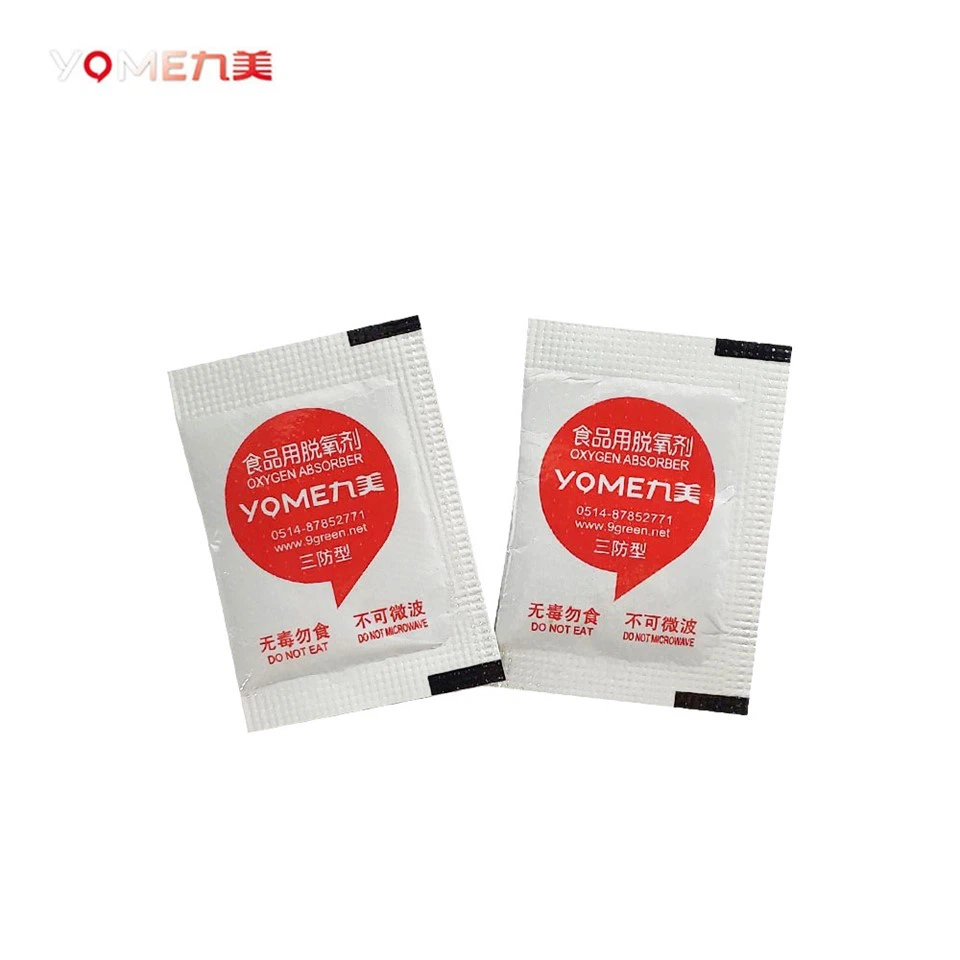
Common Chemical Components in Oxygen Absorbers for Jerky
Iron Powder
One of the most common and effective components in oxygen absorbers for jerky is iron powder. Iron is a highly reactive metal, and when it comes into contact with oxygen and moisture, it undergoes an oxidation reaction. The chemical equation for the oxidation of iron in the presence of oxygen and water is as follows:
$4Fe + 3O_{2}+6H_{2}O\rightarrow4Fe(OH)_{3}$
This reaction is exothermic, meaning it releases heat. The iron powder in oxygen absorbers is usually in a fine form to maximize the surface area available for reaction with oxygen. As the iron oxidizes, it consumes the oxygen in the package, reducing the oxygen concentration to a very low level. This helps to prevent the oxidation of the fats in the jerky, which can lead to rancidity, and inhibits the growth of aerobic bacteria and mold.
Activated Carbon
Activated carbon is another important component in many oxygen absorbers for jerky. It is a form of carbon that has been processed to have a very large surface area, typically several hundred square meters per gram. This high surface area allows activated carbon to adsorb a wide range of substances, including oxygen, water vapor, and volatile organic compounds (VOCs).
In the context of oxygen absorbers for jerky, activated carbon serves multiple functions. Firstly, it can help to enhance the overall oxygen - absorbing capacity of the absorber by adsorbing additional oxygen molecules. Secondly, it can adsorb the VOCs that are released during the storage of jerky. These VOCs can contribute to the off - flavors and odors in the jerky, and by removing them, activated carbon helps to maintain the fresh taste and aroma of the product. Additionally, activated carbon can adsorb excess moisture, which is beneficial as it helps to prevent the growth of mold and bacteria that thrive in moist environments.
Sodium Chloride (Salt)
Sodium chloride, or common table salt, is often added to oxygen absorbers for jerky. Salt acts as a catalyst in the oxidation reaction of iron. It helps to increase the rate of the reaction between iron and oxygen by facilitating the transfer of electrons. By accelerating the oxidation process, salt ensures that the oxygen in the package is removed quickly and efficiently.
Moreover, salt has hygroscopic properties, which means it can attract and absorb water vapor from the surrounding environment. This is important because the oxidation reaction of iron requires the presence of water. By absorbing moisture, salt helps to maintain the moisture level necessary for the iron oxidation reaction to occur effectively.
Other Possible Components
In addition to the main components mentioned above, oxygen absorbers for jerky may also contain other substances depending on the specific formulation and manufacturer. Some absorbers may include a small amount of calcium hydroxide, which can react with carbon dioxide present in the package. The reaction between calcium hydroxide and carbon dioxide forms calcium carbonate, which further helps to create an inert environment inside the package.
There may also be a porous material such as diatomaceous earth or silica gel in some oxygen absorbers. These materials serve as a support structure for the other components, providing a large surface area for the reactions to take place and helping to distribute the components evenly throughout the absorber.
Different Types of Oxygen Absorbers for Jerky
As a supplier, we offer a variety of oxygen absorbers for jerky to meet different customer needs. For example, the Yome - D Dried Type Oxygen Absorbers are specifically designed for use with dried foods like jerky. They are formulated to have a high oxygen - absorbing capacity and can effectively remove oxygen from the package, even in low - humidity environments.
We also have Oxygen Absorber for Coffee Beans, which can also be used for jerky in some cases. These absorbers are optimized to work in a way that preserves the flavor and aroma of the product, which is also important for jerky.
Our Food Safe Oxygen Absorbers ensure that the components used in the absorbers are safe for direct contact with food. This is a crucial consideration when using oxygen absorbers for jerky, as the safety of the product is of utmost importance.
How the Chemical Composition Affects Performance
The chemical composition of oxygen absorbers directly impacts their performance. The ratio of iron powder to other components, such as activated carbon and salt, needs to be carefully balanced to ensure optimal oxygen - absorbing capacity and speed. If there is too little iron powder, the absorber may not be able to remove oxygen quickly enough, and the jerky may still be at risk of oxidation and spoilage. On the other hand, if there is too much iron powder, the absorber may generate excessive heat during the oxidation reaction, which could potentially damage the jerky.
The presence and amount of activated carbon also affect the absorber's ability to adsorb VOCs and moisture. A higher amount of activated carbon can lead to better air quality preservation inside the package, reducing the development of off - flavors and odors.
The role of salt as a catalyst is also significant. If the amount of salt is not appropriate, the oxidation reaction of iron may be too slow or too fast, either resulting in incomplete oxygen removal or a rapid and potentially uncontrolled reaction.
Contact for Purchase and Collaboration
If you are in the business of producing or selling jerky and are interested in our high - quality oxygen absorbers, we would love to hear from you. Our team of experts can provide you with detailed information about the different types of oxygen absorbers, their chemical compositions, and how they can best suit your specific needs. Whether you need a small quantity for a trial or a large - scale supply for your production line, we can offer competitive pricing and reliable delivery. Contact us to start a discussion about your oxygen absorber requirements and let us help you keep your jerky fresh and delicious for your customers.
References
- Labuza, T. P., & Breene, W. M. (1989). Applications of “active packaging” for improvement of shelf - life and nutritional quality of fresh and extended - shelf - life foods. Journal of Food Processing and Preservation, 13(1 - 2), 1 - 69.
- Rooney, M. L. (1995). Active food packaging technologies. Blackie Academic & Professional.
- Yam, K. L., Takhistov, P. T., & Miltz, J. (2005). Intelligent packaging: Concepts and applications. Journal of Food Science, 70(1), R1 - R10.