

Hey there! As a supplier of CO2 absorbers, I often get asked about the capacity of a typical CO2 absorber. It's a super important question, especially for those looking to control CO2 levels in various environments. So, let's dive right in and break it down.
First off, what exactly is a CO2 absorber? Well, it's a device or material that's designed to remove carbon dioxide from a gas mixture. There are different types out there, and they're used in a wide range of applications, from keeping fresh vegetables in storage to industrial processes.
Now, when we talk about the capacity of a CO2 absorber, we're basically referring to how much CO2 it can absorb before it needs to be replaced or regenerated. This capacity can vary quite a bit depending on a few key factors.
Factors Affecting CO2 Absorber Capacity
1. Type of Absorbent Material
There are several materials used in CO2 absorbers, and each has its own absorption capacity. For example, activated carbon is a popular choice. It's porous and has a large surface area, which allows it to trap CO2 molecules. But its capacity can be affected by factors like temperature and humidity. Another common material is soda lime. Soda lime is great at absorbing CO2 and is often used in medical applications, like in anesthesia machines. It has a relatively high capacity and can work well in a range of conditions.
2. Size and Design of the Absorber
The physical size of the CO2 absorber plays a big role in its capacity. A larger absorber generally has more absorbent material, which means it can hold more CO2. The design also matters. Some absorbers are designed with a more efficient flow path for the gas, which can increase the contact time between the gas and the absorbent material, leading to better absorption.
3. Operating Conditions
The environment in which the CO2 absorber is used can have a significant impact on its capacity. Temperature, pressure, and the concentration of CO2 in the gas mixture all matter. For instance, at higher temperatures, the absorption capacity of some materials may decrease. And if the CO2 concentration in the gas is very high, the absorber may reach its capacity more quickly.
Typical Capacity Ranges
So, what are the typical capacity ranges for CO2 absorbers? Well, it's hard to give a one - size - fits - all answer because of the factors we just talked about. But I can give you some general ideas.
In small, portable CO2 absorbers used for things like home aquariums or small storage containers, the capacity might be in the range of a few grams to a few hundred grams of CO2. These are usually designed to handle relatively low levels of CO2 and are meant for small - scale applications.
For medium - sized absorbers used in commercial refrigeration units or small - to - medium - sized greenhouses, the capacity can range from a few kilograms to tens of kilograms of CO2. These absorbers are designed to handle larger volumes of gas and maintain a more stable CO2 level in a moderately sized space.

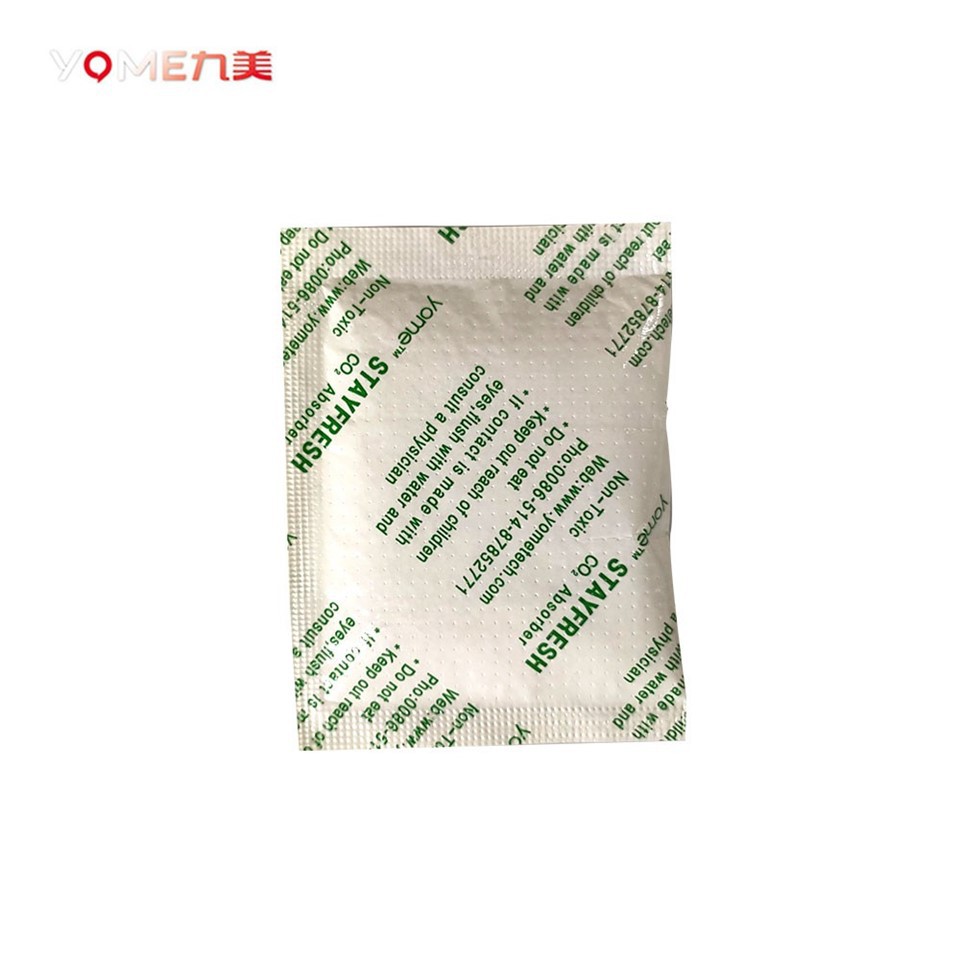
In large industrial applications, like power plants or chemical factories, the capacity of CO2 absorbers can be in the tons. These are massive systems that need to deal with huge amounts of CO2 emissions.
CO2 Absorbers for Fresh Vegetable
If you're in the business of storing fresh vegetables, you know how important it is to control the CO2 levels. High levels of CO2 can cause spoilage and reduce the shelf life of your produce. That's where our CO2 Absorbers for Fresh Vegetable come in.
Our absorbers for fresh vegetables are designed to have an optimal capacity for this specific application. They're sized and designed to fit well in vegetable storage rooms or transport containers. The absorbent material we use is carefully selected to work efficiently at the temperatures and humidity levels typically found in vegetable storage. It can effectively remove excess CO2, helping to keep your vegetables fresh for longer.
Calculating the Right Capacity for Your Needs
Figuring out the right capacity of a CO2 absorber for your specific needs can be a bit tricky. But here are some steps you can take.
First, determine the volume of the space where you'll be using the absorber. This will give you an idea of how much gas needs to be treated. Then, find out the expected CO2 generation rate in that space. For example, in a greenhouse, plants produce CO2 during respiration, and you need to account for that.
Once you have these numbers, you can use some basic calculations or consult with an expert. You'll also need to consider any safety margins. It's better to have an absorber with a slightly higher capacity than you think you'll need to ensure reliable performance.
Contact Us for Your CO2 Absorber Needs
If you're still not sure what capacity of CO2 absorber is right for you, don't worry. We're here to help. As a supplier of CO2 absorbers, we have a team of experts who can guide you through the process. Whether you're in the fresh vegetable business, an industrial operation, or any other field that needs CO2 control, we can provide you with the right absorber.
Just reach out to us, and we can have a chat about your specific requirements. We'll work with you to find the best solution, whether it's a standard product or a custom - designed absorber. So, don't hesitate to contact us for more information and to start the procurement process.
References
- Perry, R. H., & Green, D. W. (Eds.). (1997). Perry's Chemical Engineers' Handbook. McGraw - Hill.
- Kohl, A. L., & Nielsen, R. B. (1997). Gas Purification. Gulf Publishing Company.