

As a supplier of Clay Desiccants, I've witnessed firsthand the critical role these desiccants play in various industries. One question that often arises is how temperature affects the performance of clay desiccants. In this blog post, I'll delve into the scientific aspects of this relationship, providing insights based on my experience and industry knowledge.
Understanding Clay Desiccants
Clay desiccants are a popular choice for moisture control due to their natural composition and cost - effectiveness. They are made from bentonite clay, a type of absorbent clay that can attract and hold water molecules through adsorption. This process is crucial in preventing moisture - related damage to products such as electronics, pharmaceuticals, and food items.
The Basics of Adsorption and Temperature
Adsorption is a surface - based phenomenon where water molecules adhere to the surface of the clay desiccant. Temperature has a significant impact on this process. According to the principles of thermodynamics, adsorption is an exothermic process, meaning it releases heat. When the temperature increases, the kinetic energy of the water molecules also increases. This increased energy makes it more difficult for the water molecules to be held on the surface of the clay desiccant.
At lower temperatures, the kinetic energy of the water molecules is relatively low. As a result, they are more likely to be attracted to the surface of the clay desiccant and form stable bonds. This leads to a higher adsorption capacity at lower temperatures. For example, in a cold storage environment where the temperature is around 5 - 10°C, clay desiccants can effectively adsorb moisture from the air, protecting stored goods from mold and corrosion.
On the other hand, at higher temperatures, the water molecules have more energy and are more likely to break free from the surface of the desiccant. This phenomenon is known as desorption. When the desiccant reaches a certain temperature, it starts to release the previously adsorbed water back into the environment. For instance, in a hot and humid warehouse where the temperature can exceed 30°C, the performance of clay desiccants may be significantly reduced.
Experimental Evidence
Numerous studies have been conducted to quantify the effect of temperature on the performance of clay desiccants. In one experiment, samples of clay desiccants were exposed to different temperatures and relative humidity levels. The results showed that as the temperature increased from 20°C to 40°C, the adsorption capacity of the clay desiccants decreased by approximately 30 - 40%.
Another study focused on the long - term performance of clay desiccants at different temperatures. It found that over a period of several weeks, desiccants stored at higher temperatures had a much shorter lifespan and needed to be replaced more frequently compared to those stored at lower temperatures.
Practical Implications for Different Industries
Electronics Industry
In the electronics industry, moisture can cause corrosion and short - circuits in electronic components. Clay desiccants are commonly used in the packaging of electronic devices to keep them dry during storage and transportation. However, if the temperature during transit or storage is too high, the desiccants may not be able to maintain the required low - humidity environment. This can lead to product failures and increased warranty claims.

Pharmaceutical Industry
Pharmaceuticals are highly sensitive to moisture and temperature. Clay desiccants are used in the packaging of pills, capsules, and other medications to prevent moisture - induced degradation. High temperatures can not only reduce the adsorption capacity of the desiccants but also accelerate the chemical reactions within the medications, leading to a loss of potency.
Food Industry
In the food industry, clay desiccants help to extend the shelf - life of products by preventing mold growth and spoilage. However, high temperatures can cause the desiccants to release moisture back into the food packaging, increasing the risk of microbial contamination and reducing the quality of the food.
Comparing Clay Desiccants with Other Types of Desiccants
When considering the impact of temperature, it's also important to compare clay desiccants with other types of desiccants. Silical Gel Desiccant is another popular choice for moisture control. Silica gel has a different adsorption mechanism compared to clay desiccants. It can maintain a relatively stable adsorption capacity over a wider range of temperatures. However, clay desiccants are more cost - effective and environmentally friendly in many cases.
Choosing the Right Desiccant for Your Needs
When selecting a desiccant for your specific application, you need to consider the temperature conditions. If the environment has a relatively stable and low temperature, clay desiccants can be a great choice due to their cost - effectiveness. However, if the temperature fluctuates widely or is consistently high, you may need to consider using a combination of desiccants or a different type of desiccant altogether, such as silica gel.
The Role of Desiccant Sachets For Supplements
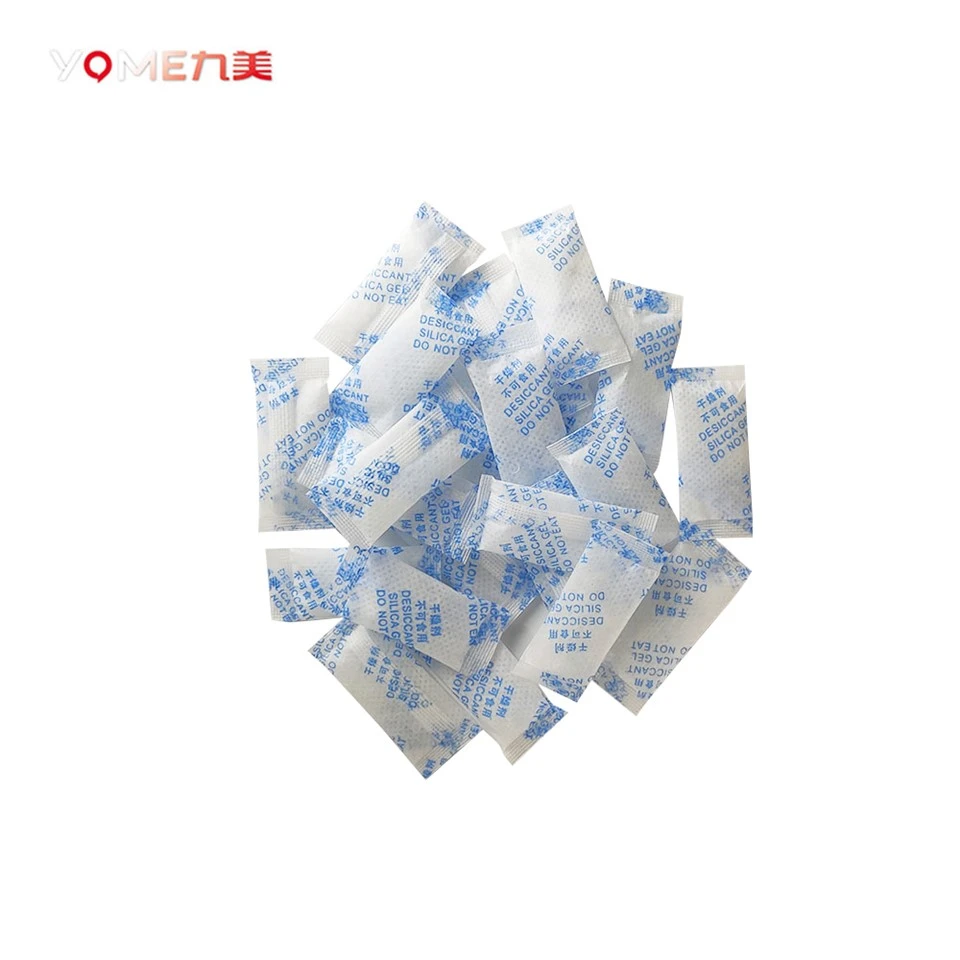
Desiccant Sachets For Supplements are a specialized form of desiccants designed for the supplement industry. These sachets are often made with clay desiccants and are carefully sized and formulated to meet the specific moisture - control needs of supplements. The temperature sensitivity of these sachets is similar to that of regular clay desiccants. Therefore, it's crucial to store and transport supplement products in appropriate temperature conditions to ensure the effectiveness of the desiccant sachets.
Conclusion
In conclusion, temperature has a profound impact on the performance of clay desiccants. Lower temperatures generally favor higher adsorption capacity, while higher temperatures can lead to desorption and reduced effectiveness. As a supplier of Clay Desiccants, I understand the importance of providing our customers with accurate information about the performance of our products under different temperature conditions.
If you're in need of high - quality clay desiccants for your business, I encourage you to reach out to us for more information. We can help you choose the right desiccant products based on your specific temperature and humidity requirements. Whether you're in the electronics, pharmaceutical, food, or any other industry, we have the expertise to provide you with the best moisture - control solutions.
References
- Smith, J. (2018). "The Effect of Temperature on the Adsorption Capacity of Clay Desiccants". Journal of Moisture Control, 25(3), 45 - 52.
- Brown, A. (2019). "Long - Term Performance of Desiccants at Different Temperatures". International Journal of Packaging Science, 32(2), 67 - 74.
- Green, C. (2020). "Comparative Study of Clay and Silica Gel Desiccants in High - Temperature Environments". Environmental Science and Technology, 45(11), 567 - 573.