

California Assembly Bill 660 (AB 660), effective July 1, 2026, has brought renewed attention to a long-standing issue in the food industry: confusion over what package date labels actually mean.
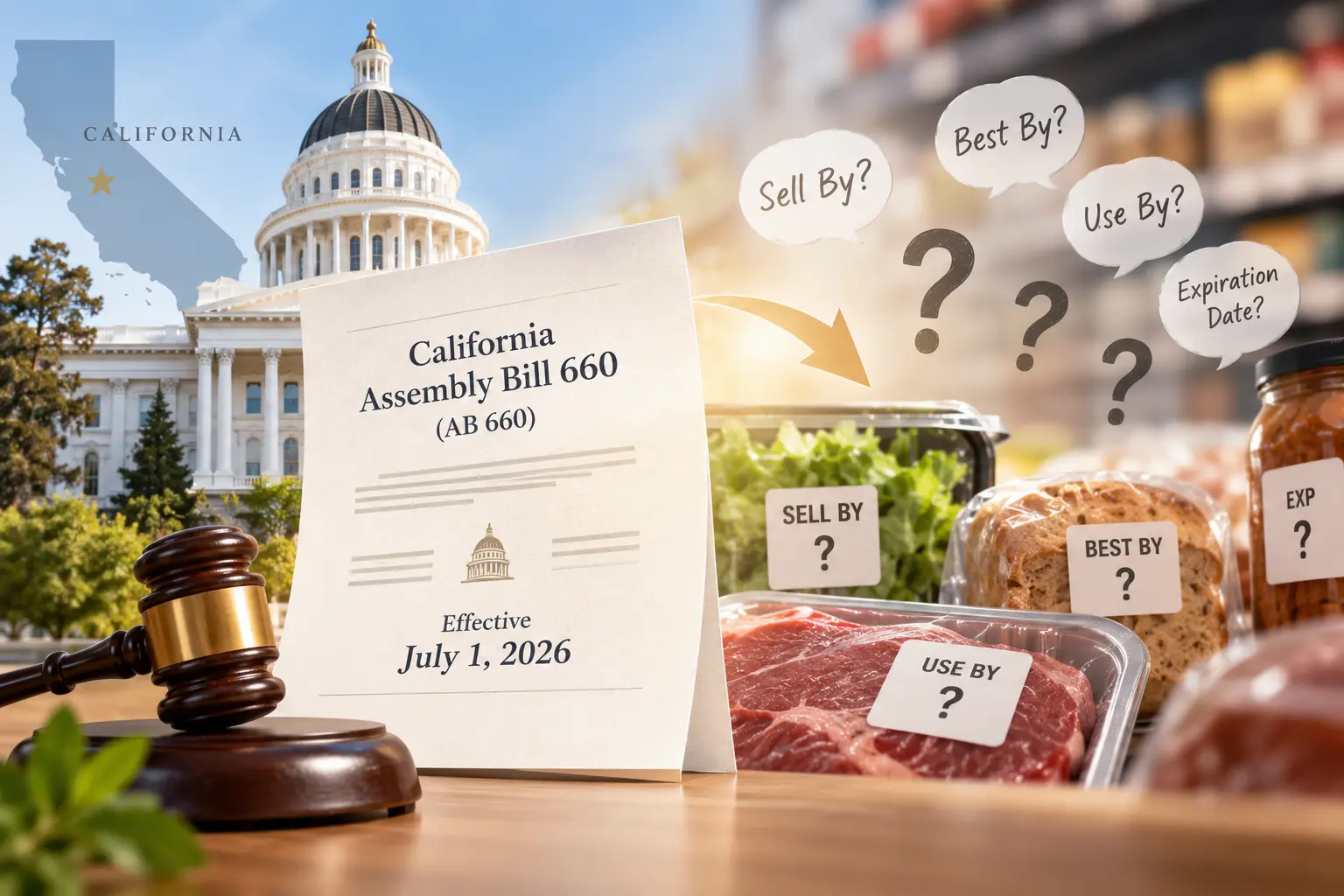
Under California's new system, consumer-facing "Sell By" dates are generally being replaced by standardized terminology that distinguishes between food quality and food safety:
"BEST if Used By" indicates the period during which a food product is expected to retain its best quality.
"USE By" is used for a date related to food safety.
This distinction is important. A food product may lose freshness, flavor, color or texture before it becomes unsafe. At the same time, a product that appears acceptable is not necessarily safe if harmful microorganisms have developed.
Clearer date labels can help consumers understand the difference, but the date printed on a package is only part of the picture. Effective packaging, appropriate preservation methods and product-specific shelf-life validation all play important roles in helping food maintain its expected quality and safety.
Shelf Life Starts with the Packaging System
Food quality can deteriorate through exposure to oxygen, moisture, light, microorganisms and temperature fluctuations. A properly designed packaging system helps control these factors throughout transportation, storage and retail display.
For oxygen-sensitive foods, high-barrier packaging is particularly important. Coated barrier films, multilayer laminates and aluminum-foil laminates can significantly reduce oxygen transmission from the external environment.
However, even after sealing, oxygen may remain:
- In the package headspace
- Between or within food particles
- Dissolved in the food itself
In addition, oxygen can gradually enter the package over time through packaging materials, seals, pinholes or other defects.
High-barrier packaging helps slow external oxygen transmission, but it cannot remove the residual oxygen already present inside the sealed package. This is where an oxygen absorber can provide additional protection.
How YOME Oxygen Absorbers Help Protect Food Quality
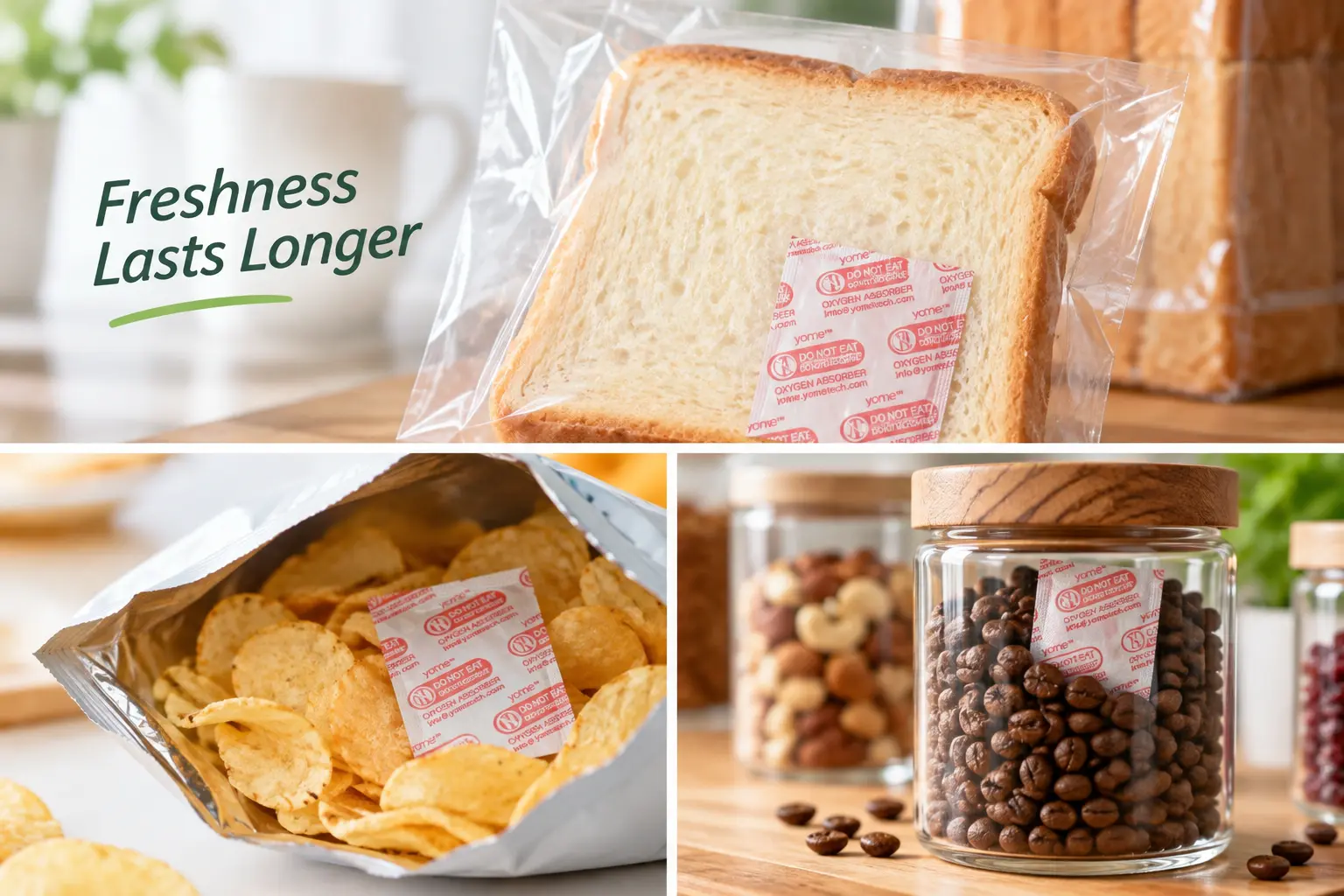
YOME oxygen absorbers are designed to remove residual oxygen from sealed food packages and help maintain a low-oxygen environment when used with suitable high-barrier packaging.
Reducing oxygen can help slow several common causes of food quality deterioration, including:
- Oxidation of fats and oils
- Development of rancid odors and flavors
- Loss of aroma and flavor quality
- Discoloration
- Growth of aerobic molds and other oxygen-dependent spoilage microorganisms
For products such as bakery foods, tortillas, nuts, dried foods, jerky, coffee and other oxygen-sensitive foods, oxygen control can help preserve the intended taste, color, aroma and texture for a longer period.
When properly selected and used as part of a validated packaging system, YOME oxygen absorbers can help manufacturers achieve longer quality-retention targets and reduce premature product deterioration.
They may also help reduce food waste by preventing products from becoming stale, rancid, discolored or moldy before consumers have the opportunity to use them.
Can an Oxygen Absorber Extend a "USE By" Date?
An oxygen absorber may contribute to a broader food-safety and shelf-life control system, particularly by helping inhibit aerobic molds and certain oxygen-dependent microorganisms. However, it should not be considered a standalone method for extending a safety-related "USE By" date.
For manufacturers, any safety-related shelf-life claim should be supported by appropriate product-specific food-safety assessment and validation.
Important factors may include:
- Product formulation
- Water activity and pH
- Initial microbial load
- Manufacturing hygiene
- Heat treatment or other processing conditions
- Packaging barrier performance
- Seal integrity
- Storage and distribution temperature
- Type and capacity of the oxygen absorber
- Potential growth of anaerobic microorganisms
- Shelf-life and microbiological testing
Removing oxygen does not control every microorganism. Certain microorganisms can grow under reduced-oxygen conditions if other food-safety controls are not in place.
For this reason, oxygen absorbers should be considered one component of a complete preservation and food-safety system-not a substitute for proper formulation, processing, temperature control or microbiological validation.
The Entire Packaging System Matters
An oxygen absorber can only perform effectively when the other parts of the packaging system are suitable.
When selecting an oxygen absorber, manufacturers should consider several factors.
Residual oxygen inside the package
This includes oxygen in the headspace as well as oxygen trapped within or dissolved in the food.
Oxygen transmission through the packaging
A low-barrier packaging material may allow oxygen to enter faster than the absorber can effectively control it.
Target shelf life
Longer shelf-life targets generally require greater consideration of both the absorber's total oxygen absorption capacity and the barrier performance of the packaging.
Product moisture and storage conditions
Different oxygen absorber formulations activate and perform differently depending on humidity, product characteristics and storage conditions.
Package seal integrity
Poor seals, pinholes or damaged packaging may allow continuous oxygen entry and prevent the absorber from maintaining a low-oxygen environment.
Product-specific deterioration risks
Mold growth, rancidity, discoloration and flavor loss can have different causes and may require different packaging and preservation strategies.
YOME can recommend an appropriate oxygen absorber based on the product type, package dimensions, headspace volume, packaging structure, storage conditions and target shelf life. Product-specific testing should then be conducted to confirm performance under actual commercial conditions.
Clearer Labels Need Better Shelf-Life Control
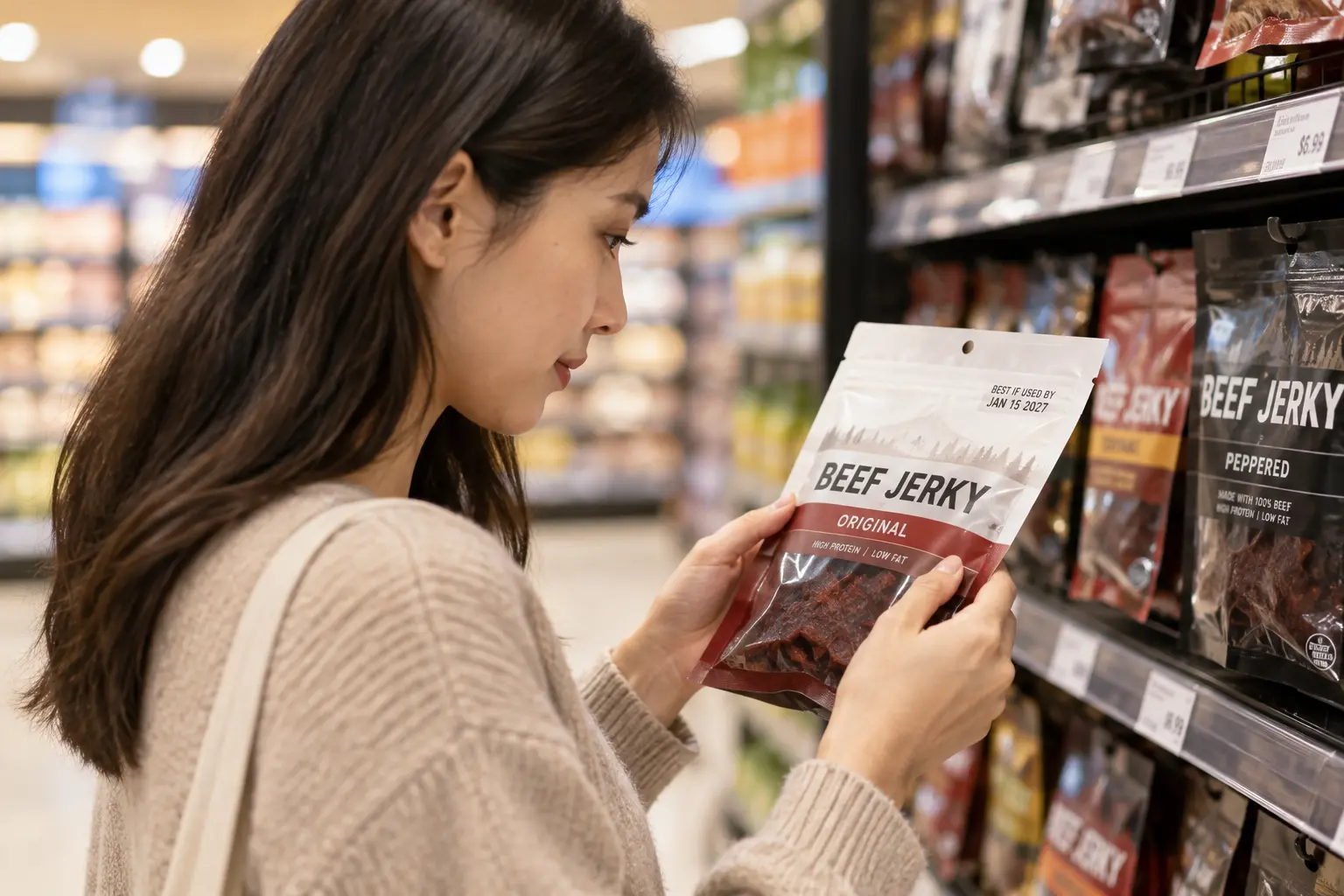
California's standardized date labels make the distinction between food quality and food safety clearer for consumers. But the date printed on a package is only meaningful when the product and packaging system can support it.
High-barrier packaging helps limit oxygen entering the package, while YOME oxygen absorbers help remove residual oxygen inside. When properly selected and validated as part of the complete packaging system, they can help reduce oxidation, rancidity, discoloration and aerobic mold growth-supporting more consistent product quality throughout the intended shelf life.
At YOME, we help food manufacturers select oxygen absorbers based on product type, package size, headspace, packaging structure, storage conditions and target shelf life.
A clearer date label helps consumers understand when to use a product. A well-designed packaging system helps manufacturers ensure the product can genuinely maintain its expected quality-and, where properly validated, its safety-throughout that period.


