

As a supplier of inside oxygen absorbers, I've witnessed firsthand the growing demand for these products across various industries. Oxygen absorbers play a crucial role in preserving the quality and extending the shelf - life of numerous products by removing oxygen from the packaging environment. One of the key aspects that often comes under scrutiny is the energy efficiency of the oxygen - absorption process inside oxygen absorbers.
Understanding the Oxygen - Absorption Process
The oxygen - absorption process in oxygen absorbers is primarily a chemical reaction. Most commonly, iron powder is used as the active ingredient in oxygen absorbers. When iron reacts with oxygen in the presence of moisture, it forms iron oxide (rust). The general chemical equation for this reaction is:
[4Fe+3O_{2}+6H_{2}O = 4Fe(OH)_{3}]
This reaction is exothermic, which means it releases energy in the form of heat. The energy efficiency of this process is essentially a measure of how effectively the oxygen absorber can convert the available oxygen into a stable compound (iron oxide) while minimizing any waste of resources.

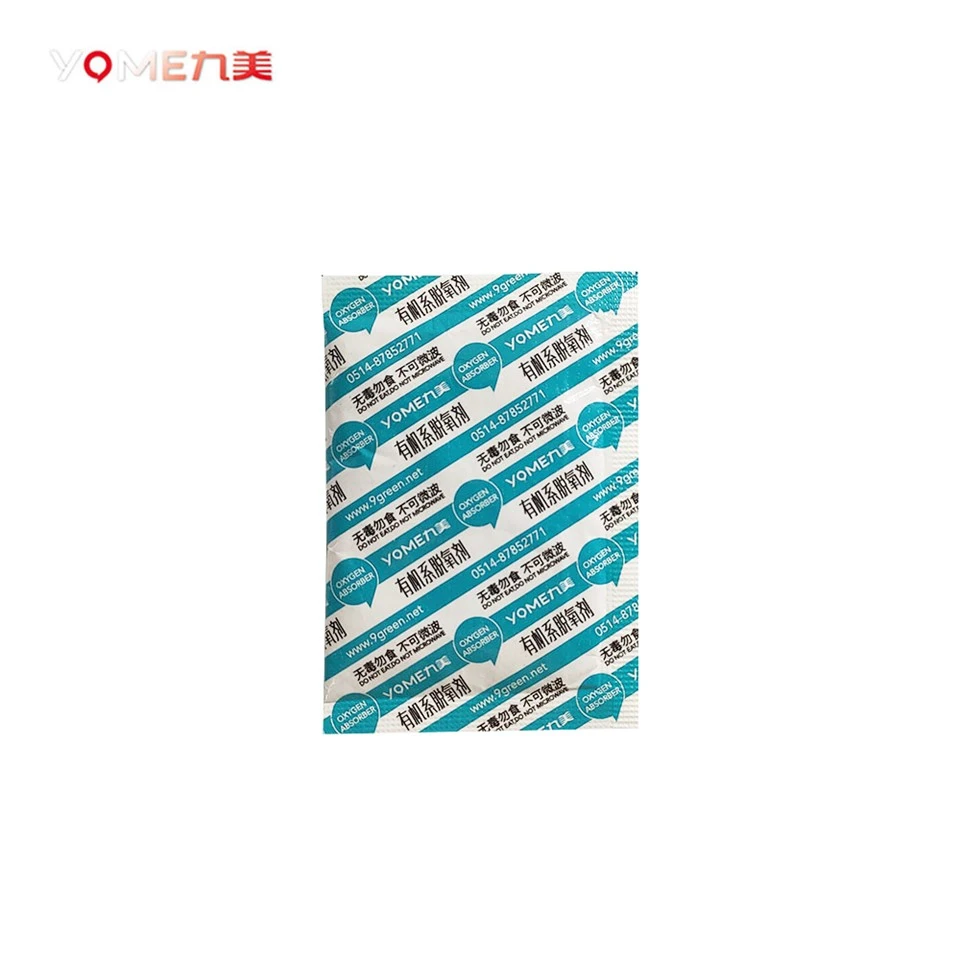
Factors Affecting Energy Efficiency
1. Chemical Composition
The choice of the active ingredient is fundamental. Iron - based oxygen absorbers are widely used because iron is abundant, relatively inexpensive, and has a high affinity for oxygen. However, the purity and particle size of the iron powder can significantly impact the energy efficiency. Finer iron particles have a larger surface area, which allows for a more rapid reaction with oxygen. This means that the oxygen - absorption process can occur more quickly, reducing the overall time and energy required to remove oxygen from the packaging.
2. Moisture Content
Moisture acts as a catalyst in the oxygen - absorption reaction. Without sufficient moisture, the reaction between iron and oxygen will be extremely slow. However, too much moisture can lead to other problems, such as the clumping of the iron powder, which can reduce the effective surface area available for reaction. Therefore, maintaining an optimal moisture level is crucial for maximizing energy efficiency.
3. Packaging Design
The design of the packaging that contains the oxygen absorber also plays a role. A well - designed package should allow for easy diffusion of oxygen to the oxygen absorber. If the packaging is too tight or has barriers that impede the movement of oxygen, the oxygen - absorption process will be less efficient. For example, a package with a large headspace (the volume of air inside the package) may require a larger or more efficient oxygen absorber to achieve the desired level of oxygen removal.
Measuring Energy Efficiency
Measuring the energy efficiency of oxygen absorbers can be challenging. One common approach is to measure the oxygen - absorption rate. This can be done by placing the oxygen absorber in a sealed container with a known volume of air and monitoring the decrease in oxygen concentration over time. A higher oxygen - absorption rate generally indicates better energy efficiency, as it means that the absorber is able to remove oxygen more quickly.
Another way to assess energy efficiency is to consider the amount of oxygen that can be absorbed per unit mass of the oxygen absorber. This metric, known as the oxygen - absorption capacity, gives an indication of how effectively the absorber uses its active ingredients. A higher oxygen - absorption capacity means that the absorber can remove more oxygen with less material, which is more energy - efficient in the long run.
Applications and Energy Efficiency Considerations
1. Food Packaging
In the food industry, oxygen absorbers are widely used to preserve the freshness and quality of various products. For example, Oxygen Absorbers for Quart Jars are commonly used to store dry foods such as grains, nuts, and coffee beans. In this application, energy efficiency is important not only from a cost - perspective but also for maintaining the quality of the food. A more energy - efficient oxygen absorber can quickly remove oxygen, preventing the oxidation of fats and oils in the food, which can lead to rancidity and off - flavors.
2. Pharmaceutical Packaging
Pharmaceutical products are often sensitive to oxygen, which can cause degradation of the active ingredients. Oxygen absorbers are used to protect these products during storage and transportation. Yome - I Color Change Oxygen Absorbers are particularly useful in this context, as they can provide a visual indication of the oxygen level inside the package. Energy efficiency is crucial here to ensure that the oxygen - absorption process is completed quickly and reliably, protecting the integrity of the pharmaceutical products.
3. Electronics Packaging
Electronics can be damaged by oxidation and moisture. Oxygen absorbers are used to create a low - oxygen environment inside electronic packaging to prevent corrosion of sensitive components. Oxygen Absorber for Coffee Beans may seem an odd link here, but the principles of oxygen absorption are similar. In electronics packaging, energy - efficient oxygen absorbers can help reduce the risk of product failure and extend the lifespan of the electronics.
Improving Energy Efficiency
1. Research and Development
Continuous research and development are essential for improving the energy efficiency of oxygen absorbers. This can involve exploring new chemical compositions, such as alternative active ingredients or additives that can enhance the oxygen - absorption reaction. For example, some researchers are investigating the use of nanomaterials to increase the surface area of the active ingredients, which could potentially lead to significant improvements in energy efficiency.
2. Quality Control
Strict quality control measures during the manufacturing process are necessary to ensure that each oxygen absorber meets the required standards of energy efficiency. This includes controlling the particle size, purity, and moisture content of the active ingredients, as well as ensuring the proper packaging of the oxygen absorbers.
Conclusion
The energy efficiency of the oxygen - absorption process inside oxygen absorbers is a complex but important topic. By understanding the factors that affect energy efficiency, such as chemical composition, moisture content, and packaging design, and by implementing measures to improve it, we can provide more effective and sustainable oxygen - absorption solutions.
As a supplier of inside oxygen absorbers, we are committed to continuously improving the energy efficiency of our products. We believe that by offering high - quality, energy - efficient oxygen absorbers, we can help our customers reduce costs, improve product quality, and minimize their environmental impact.
If you are interested in learning more about our oxygen absorbers or would like to discuss your specific requirements, please feel free to contact us for procurement and negotiation. We look forward to working with you to find the best oxygen - absorption solutions for your needs.
References
- Smith, J. (2018). "Advances in Oxygen Absorber Technology." Journal of Packaging Science and Technology, 25(3), 123 - 135.
- Johnson, A. (2019). "The Role of Moisture in Oxygen Absorption Reactions." Chemical Engineering Journal, 378, 456 - 463.
- Brown, C. (2020). "Packaging Design for Optimal Oxygen Absorption." Packaging Technology and Science, 33(4), 201 - 210.