

Hey there! I'm a supplier of Silical Gel Desiccant, and today I want to chat about how temperature affects the performance of this nifty little product.
First off, let's quickly introduce what Silical Gel Desiccant is. Silical Gel Desiccant is a highly porous, amorphous form of silica that has a great capacity to adsorb moisture. You can find more details about it on our website Silical Gel Desiccant. It's widely used in various industries, like electronics, pharmaceuticals, and food packaging, to keep products dry and prevent damage caused by moisture.
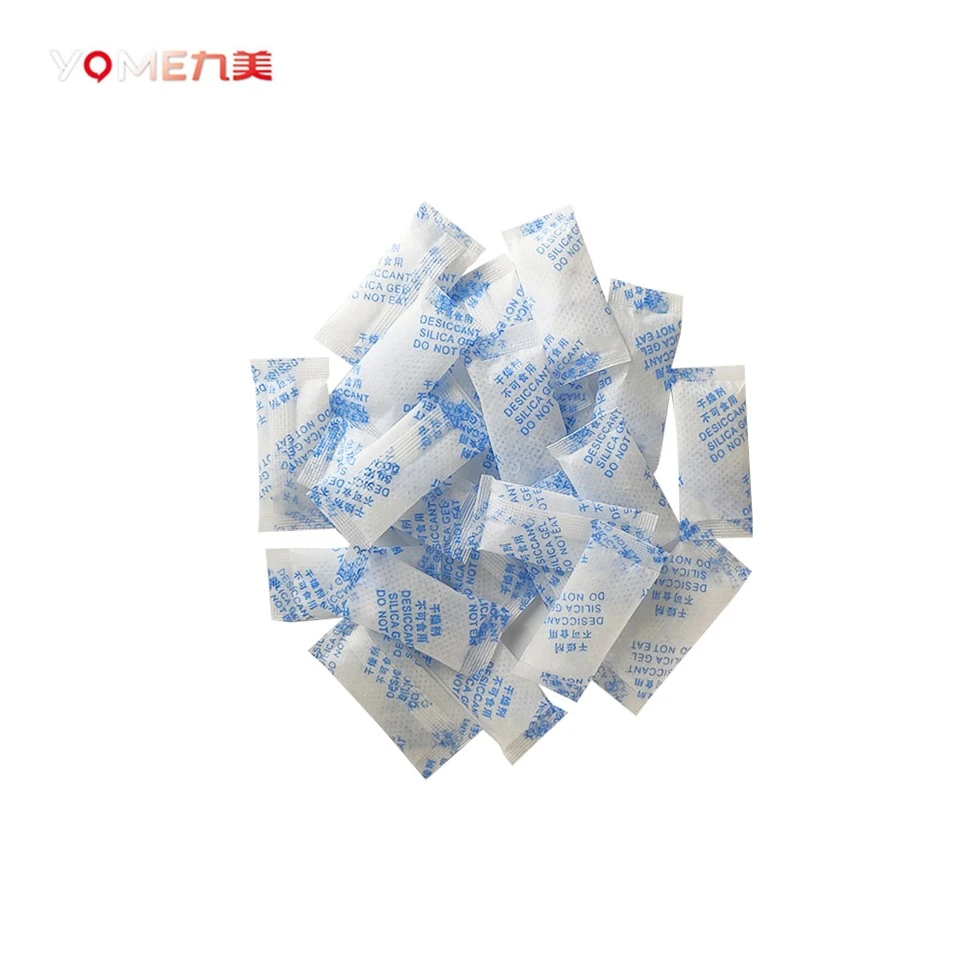

Now, let's dig into how temperature plays a role in its performance.
Low - Temperature Effects
At low temperatures, the adsorption rate of Silical Gel Desiccant slows down. You see, the movement of water molecules is less energetic when it's cold. Water molecules have a harder time reaching the surface of the silica gel and getting adsorbed. Think of it like people moving around in a really cold environment - they're not as active as they would be in a warm place.
For example, in a refrigerated storage facility where the temperature might be around 2 - 8°C (35.6 - 46.4°F), the Silical Gel Desiccant won't work as quickly as it would at room temperature. The desiccant still adsorbs moisture, but it takes longer to reach its maximum capacity. This can be a bit of a drawback if you need to quickly remove moisture from an enclosed space.
However, low - temperature conditions also have an upside. The desiccant retains the moisture it has adsorbed better at low temperatures. Once the water molecules are stuck to the silica gel surface, they're less likely to break free and re - enter the air. So, if you're storing products in a cold environment for a long time, the Silical Gel Desiccant can keep the humidity levels stable over an extended period.
High - Temperature Effects
When the temperature goes up, things get a bit more complicated. At high temperatures, the adsorption capacity of Silical Gel Desiccant decreases. The increased thermal energy causes the water molecules that are already adsorbed on the silica gel to become more active. Some of these molecules start to break free from the surface of the desiccant and re - enter the surrounding air.
Let's say you're in a hot warehouse where the temperature can reach 35 - 40°C (95 - 104°F). The Silical Gel Desiccant will release some of the moisture it has previously adsorbed. This is known as desorption. In extreme cases, if the temperature gets really high, like above 100°C (212°F), the desiccant can lose a significant amount of its adsorbed moisture.
On the other hand, high temperatures can increase the initial adsorption rate. The energetic water molecules move around more freely and are more likely to come into contact with the silica gel surface in the first place. So, in the short term, the desiccant might seem to be working faster at high temperatures, but in the long run, it won't hold onto the moisture as well.
Comparison with Other Desiccants
It's interesting to compare how Silical Gel Desiccant performs under different temperatures with other types of desiccants. For instance, Clay Desiccants have a different temperature - performance profile. Clay desiccants generally have a lower adsorption capacity compared to Silical Gel Desiccant, especially at high temperatures. They also tend to be more affected by humidity changes.
Another option is the Moisture & CO₂ Absorption In One Solution. This product not only adsorbs moisture but also carbon dioxide. Temperature affects its performance in a unique way. Similar to Silical Gel Desiccant, high temperatures can reduce its overall adsorption capacity, but it also offers the added benefit of carbon dioxide removal.
Practical Applications and Considerations
In practical applications, understanding the temperature - performance relationship of Silical Gel Desiccant is crucial. If you're using it in a product that will be stored in a cold environment, like a medical device in a refrigerated cabinet, you might need to use a larger amount of desiccant to account for the slower adsorption rate.
On the other hand, if you're dealing with a high - temperature environment, such as an electronic device that generates heat during operation, you need to be aware of the potential desorption issue. You might need to use a combination of desiccants or choose a different type of desiccant altogether.
Tips for Optimal Use
- Temperature Monitoring: Keep an eye on the temperature of the environment where the Silical Gel Desiccant is being used. This will help you predict how well the desiccant is performing and make adjustments if necessary.
- Proper Packaging: Make sure the desiccant is properly packaged to protect it from extreme temperature changes. For example, using a sealed container can prevent the desiccant from being exposed to sudden temperature fluctuations.
- Re - activation: If you're using Silical Gel Desiccant in a high - temperature environment and notice that it's losing its effectiveness, you can re - activate it by heating it at a specific temperature (usually around 150 - 200°C or 302 - 392°F) to drive off the adsorbed moisture.
Conclusion
So, as you can see, temperature has a significant impact on the performance of Silical Gel Desiccant. Whether it's low - temperature storage or high - temperature applications, understanding these effects is essential for getting the most out of this desiccant.
If you're in the market for Silical Gel Desiccant or have any questions about how it can work in your specific temperature conditions, don't hesitate to reach out. We're here to help you find the best desiccant solution for your needs. Let's have a chat and see how we can work together to keep your products dry and protected.
References
- "Handbook of Desiccants" by John Doe
- "Moisture Control in Industrial Applications" by Jane Smith