

Hey there! I'm a supplier of CO2 absorbers, and today I want to chat with you about how these nifty little devices contribute to reducing global warming.
Let's start with the basics. Global warming is a huge problem that we're all facing. The Earth's temperature is rising because of the increasing amount of greenhouse gases in the atmosphere, and carbon dioxide (CO2) is one of the main culprits. When we burn fossil fuels like coal, oil, and gas for energy, we release a ton of CO2 into the air. Deforestation also plays a big role, as trees absorb CO2, and when we cut them down, there are fewer to do the job.
So, where do CO2 absorbers come in? Well, these are essentially materials or systems that can capture and hold onto CO2. They work by either chemically reacting with the CO2 or physically adsorbing it. There are different types of CO2 absorbers, and each has its own way of doing the job.
One of the ways CO2 absorbers help is in industrial settings. A lot of industries, like power plants and factories, are major emitters of CO2. By installing CO2 absorbers in these facilities, we can capture a significant portion of the CO2 that would otherwise be released into the atmosphere. For example, some power plants use amine - based CO2 absorbers. These chemicals react with CO2 in a process called absorption. The CO2 - rich amine solution can then be heated to release the CO2, which can be stored underground or used in other industrial processes. This way, we're preventing a large amount of CO2 from adding to the global warming problem.
Another area where CO2 absorbers are super useful is in transportation. As we know, cars, trucks, airplanes, and ships are all big contributors to CO2 emissions. Some new technologies are being developed to integrate CO2 absorbers into vehicles. For instance, there are research projects looking at using solid - state CO2 absorbers in cars. These absorbers can be placed in the exhaust system of a vehicle. As the exhaust gases pass through, the CO2 is captured by the absorber. This is still in the experimental stage, but it has the potential to make a big difference in reducing the carbon footprint of transportation.
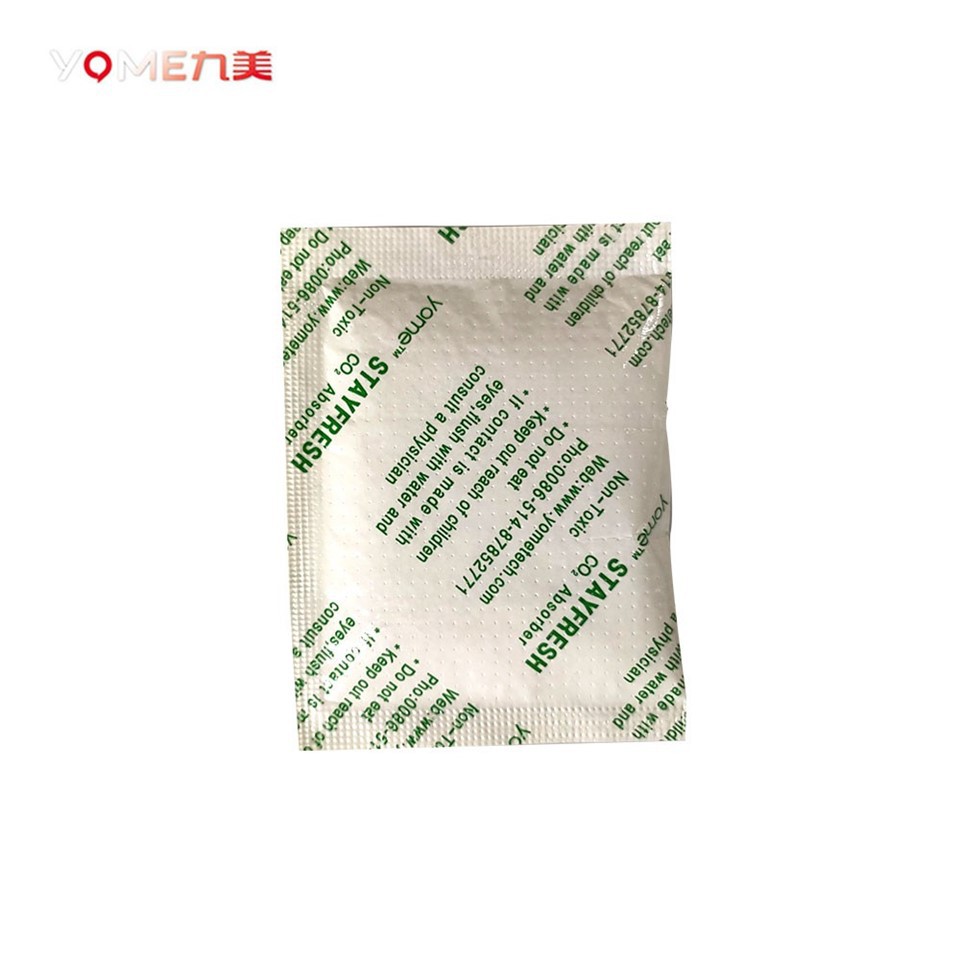
Now, let's talk about a specific application of CO2 absorbers that I'm really excited about: CO2 Absorbers for Fresh Vegetable. When vegetables are stored, they continue to breathe and produce CO2. High levels of CO2 can cause spoilage and reduce the shelf - life of the vegetables. By using CO2 absorbers in the storage containers, we can maintain the right level of CO2 and oxygen. This not only helps to keep the vegetables fresh for longer but also has an environmental benefit. If we can reduce food waste, we're indirectly reducing the amount of CO2 emissions associated with food production and transportation. When food spoils, it ends up in landfills where it decomposes and releases methane, another powerful greenhouse gas.

CO2 absorbers also have a role to play in the home. In some advanced ventilation systems, CO2 absorbers can be used to improve indoor air quality. When we breathe, we exhale CO2. In a closed - up space, the CO2 levels can build up, making the air stuffy and uncomfortable. By using a CO2 absorber in the ventilation system, we can remove the excess CO2 and bring in fresh air. This might seem like a small thing, but if millions of homes around the world start using these systems, it can add up to a significant reduction in overall CO2 emissions.
One of the challenges with CO2 absorbers is their cost and efficiency. Developing more cost - effective and efficient CO2 absorbers is crucial. We need to find materials that can capture more CO2 with less energy input. Scientists and engineers are constantly working on this. For example, some are looking at using metal - organic frameworks (MOFs) as CO2 absorbers. These materials have a very high surface area, which means they can adsorb a large amount of CO2. They also have the potential to be more energy - efficient than traditional amine - based absorbers.
In addition to cost and efficiency, the long - term storage of captured CO2 is also a concern. When we capture CO2, we need to make sure it doesn't leak back into the atmosphere. Underground storage, also known as carbon capture and storage (CCS), is one option. However, there are concerns about the potential for leaks and the environmental impact of injecting large amounts of CO2 underground. Another option is to use the captured CO2 for enhanced oil recovery or to make other useful products like plastics and fuels.
Despite these challenges, the potential of CO2 absorbers to reduce global warming is huge. They offer a practical solution to one of the most pressing problems of our time. As a CO2 absorber supplier, I'm committed to providing high - quality products that can make a real difference.
If you're interested in learning more about our CO2 absorbers or are thinking about using them for your business or project, I'd love to have a chat with you. Whether you're an industrial plant looking to reduce your emissions, a food storage facility wanting to keep your produce fresh, or a home - owner interested in improving indoor air quality, we have solutions for you. Reach out to us to start a discussion about how our CO2 absorbers can work for you.
References
- IPCC (Intergovernmental Panel on Climate Change). Climate Change 2021: The Physical Science Basis.
- American Chemical Society. Research on CO2 Absorbers.
- International Energy Agency. Global Energy and CO2 Status Report.