

Can CO2 absorbers remove all CO2 from the air?
As a supplier of CO2 absorbers, I often get asked the question: Can CO2 absorbers remove all CO2 from the air? This is a complex and important question that deserves a detailed exploration. In this blog, I'll delve into the science behind CO2 absorbers, their capabilities, limitations, and the practical implications of using them to reduce CO2 levels in various settings.
How CO2 Absorbers Work
CO2 absorbers are designed to capture and remove carbon dioxide from the surrounding air through a chemical or physical process. There are different types of CO2 absorbers, each with its own mechanism of action.
One common type is the chemical absorber, which typically contains substances like sodium hydroxide (NaOH) or potassium hydroxide (KOH). These chemicals react with CO2 to form carbonates. For example, the reaction between sodium hydroxide and CO2 can be represented as follows:

2NaOH + CO2 → Na2CO3 + H2O
Physical absorbers, on the other hand, rely on materials with high surface areas and porosity, such as activated carbon or zeolites. These materials adsorb CO2 molecules onto their surfaces through weak intermolecular forces.
The Capabilities of CO2 Absorbers
CO2 absorbers can be highly effective at reducing CO2 levels in enclosed spaces. In industrial settings, they are used to control CO2 concentrations in manufacturing processes, such as in the production of food and beverages. In the medical field, CO2 absorbers are an essential component of anesthesia machines, where they remove exhaled CO2 from the breathing circuit to maintain a safe and breathable environment for patients.
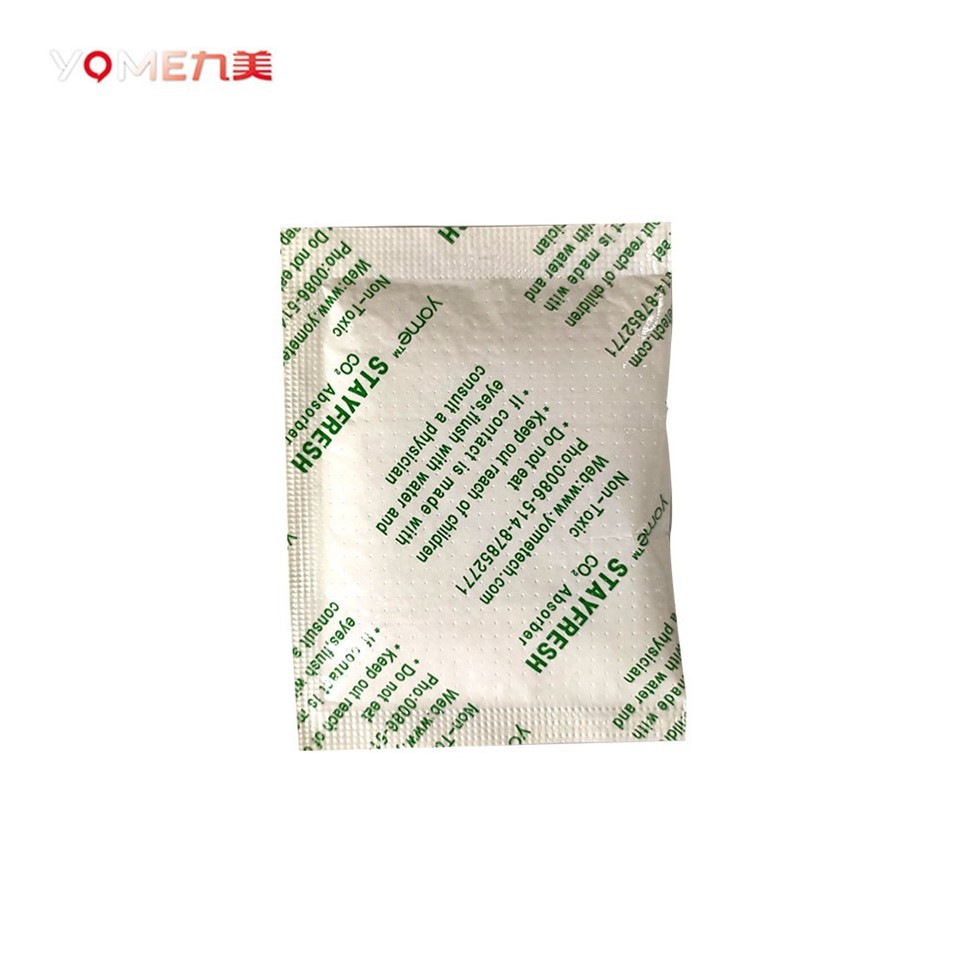
In the context of fresh vegetable storage, CO2 absorbers play a crucial role in extending the shelf - life of produce. CO2 Absorbers for Fresh Vegetable can help maintain optimal CO2 levels in storage facilities, reducing the rate of respiration and spoilage of vegetables. By removing excess CO2, these absorbers create a more favorable environment for the preservation of freshness and quality.
However, while CO2 absorbers can significantly reduce CO2 concentrations, it is unrealistic to expect them to remove all CO2 from the air.
Limitations of CO2 Absorbers
One of the main limitations is the capacity of the absorber. Every CO2 absorber has a finite capacity to capture CO2. Once this capacity is reached, the absorber becomes saturated and can no longer effectively remove CO2. The saturation point depends on various factors, including the type and amount of the absorbent material, the flow rate of the air passing through the absorber, and the initial CO2 concentration in the air.
Another limitation is the rate of CO2 production. In many environments, CO2 is constantly being produced. For example, in a room with people or animals, the respiration process continuously releases CO2 into the air. In industrial processes, chemical reactions or combustion may generate large amounts of CO2. If the rate of CO2 production exceeds the rate at which the absorber can remove it, the CO2 levels in the air will not be reduced to zero.
The efficiency of CO2 absorbers can also be affected by environmental conditions. Temperature, humidity, and the presence of other gases can all influence the performance of the absorber. For instance, high humidity can reduce the effectiveness of some chemical absorbers by causing the formation of unwanted side - reactions or by diluting the absorbent material.
Practical Implications
In practical applications, the goal is not to remove all CO2 from the air but to maintain CO2 levels within an acceptable range. In indoor spaces, the World Health Organization (WHO) recommends that indoor CO2 levels should generally be kept below 1000 ppm (parts per million) for good air quality. In some specific environments, such as cleanrooms or sensitive manufacturing facilities, even lower CO2 levels may be required.
When using CO2 absorbers, it is important to select the right type and size of the absorber based on the specific requirements of the application. Regular monitoring and replacement of the absorbers are also necessary to ensure their continued effectiveness.
Conclusion
In conclusion, while CO2 absorbers are valuable tools for reducing CO2 levels in the air, they cannot remove all CO2. Their effectiveness is limited by factors such as capacity, the rate of CO2 production, and environmental conditions. However, by carefully selecting and using CO2 absorbers, we can achieve significant reductions in CO2 concentrations and create healthier and more productive environments.
If you are interested in learning more about our CO2 absorbers or are considering a purchase for your specific application, we invite you to reach out to us for a detailed discussion. Our team of experts is ready to provide you with the best solutions tailored to your needs.
References
- Handbook of Chemical Technology and Pollution Control, by James A. Kent
- Principles of Anesthesia Equipment, by J. E. Gravenstein, N. P. Paulus, and D. S. Gravenstein
- Postharvest Biology and Technology of Fruits, Vegetables, and Flowers, by G. K. Shaw